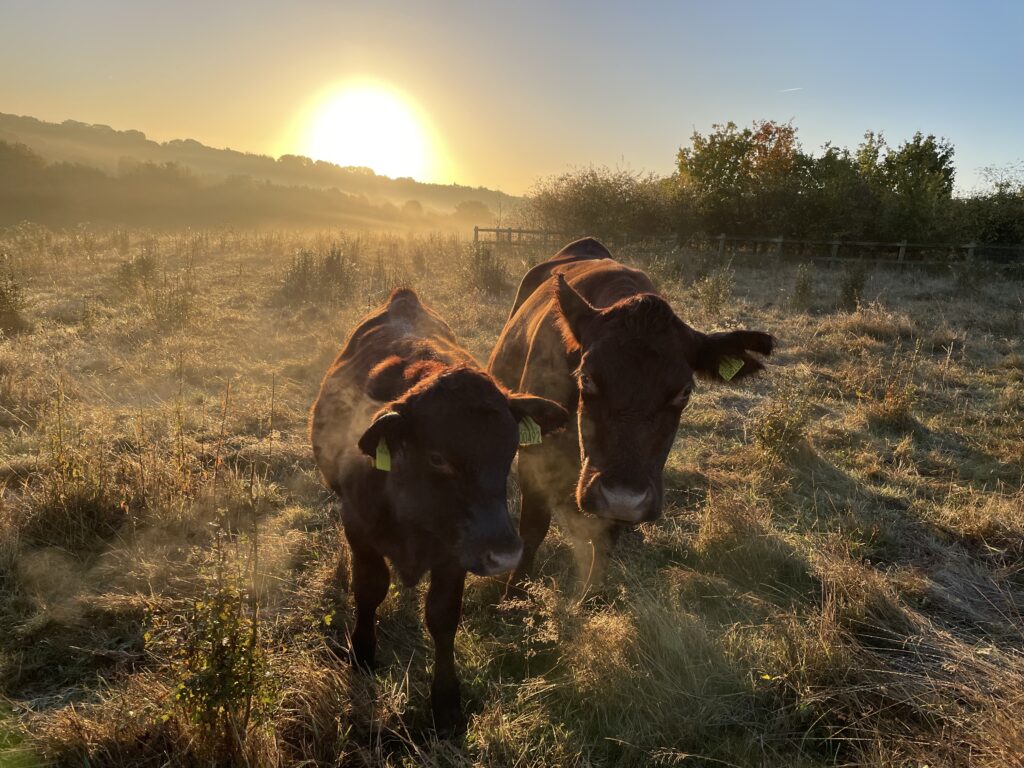
What is Conservation grazing?
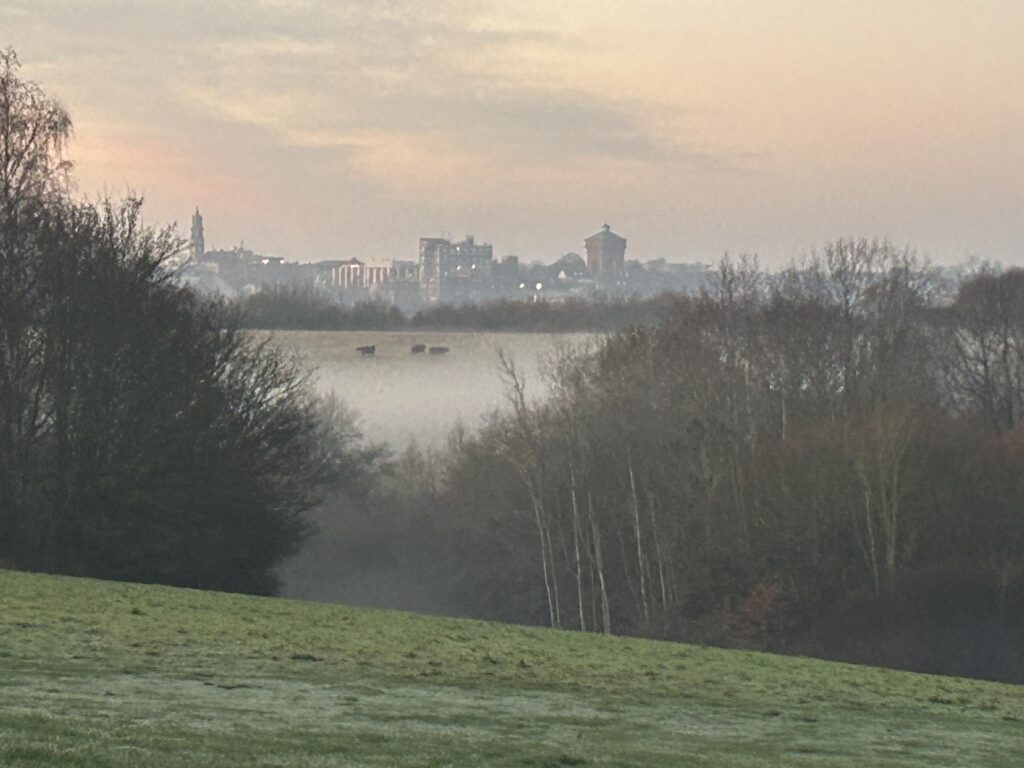
At HWCP the sight of cattle or goats against the skyline backdrop of Jumbo and the Town Hall has become an iconic High Woods view over the last few years. Thousands of people walk, run and cycle past these animals every week, but far fewer understand what they are doing, or appreciate how lucky we are to have them.
Because it is now so commonplace to see them in HWCP it is easy to forget how rare it is to see animals like these within an urban sprawl, but the use of conservation grazing stock has become a routine yet vital part of the site’s habitat management over recent years.
Conservation grazing is a sustainable and natural practice where low numbers of livestock are grazed on specific areas with the primary aim of helping to restore habitats to places rich in natural diversity.
It’s a relatively recent practice, first documented in the 1970s, but it’s just the latest, natural evolution of man’s ancient practice of using herbivores to manage, and create the landscapes around him. Whilst no land management practice is perfect, it’s become the method of choice for many Wildlife Trusts and Conservation bodies and is a huge power for positive change in the face of the climate and nature crises. Conservation livestock are now often referred to as “ecosystem engineers” because their actions fundamentally alter the environment around them, creating opportunities for many other species to thrive.
At first glance, it may seem strange how the presence of a 500kg cow for example, can help delicate wildflower biodiversity and bioabundance. But the beauty of conservation grazing is that it allows change at nature’s pace; it’s a gentle way to maintain a natural balance, causing far less disruption to other species and habitats than the shock of mechanical cutting.
HWCP is a great example of a thriving mosaic of habitats, where Ancient Woodland, Coppice Woodland, younger plantation, scrub, and marsh are all managed in different ways for the greater good. With conservation grazing the focus is on nurturing and protecting the Grassland habitats. The art is knowing which animals to use, at what density, and at what time of year in order to ensure that the right balance of human intervention, together with the chosen grazing regime, maintains or restores the habitat.
How does conservation grazing and browsing work?
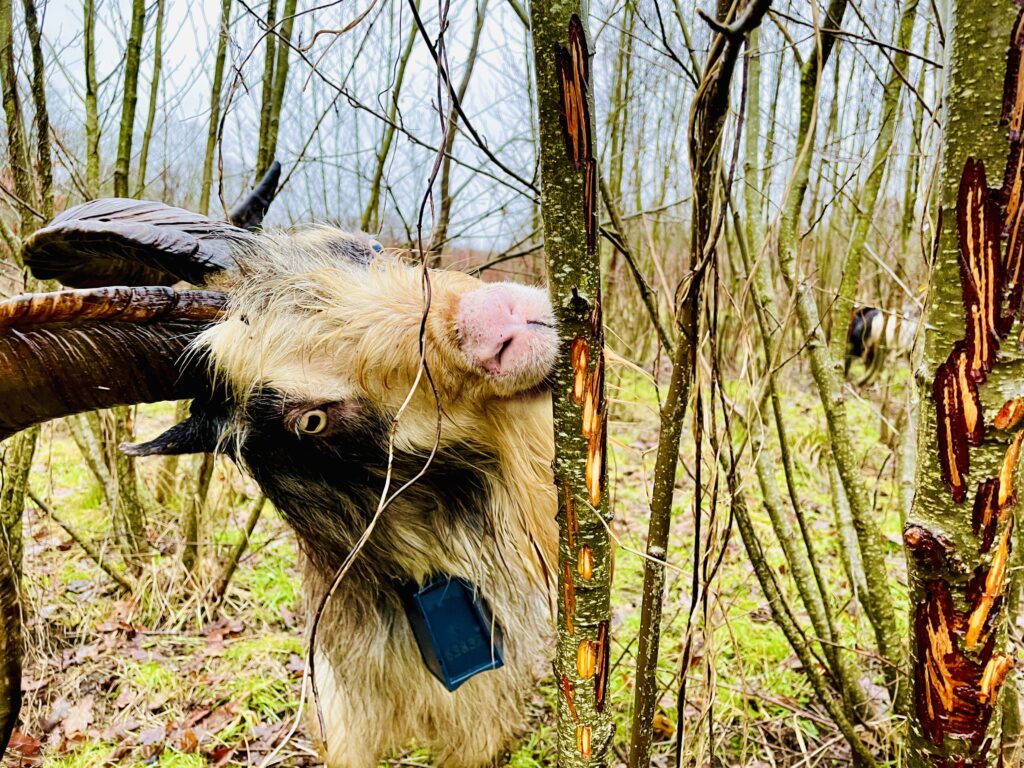
Grazing is where the animals eat low-lying vegetation such as grass, while browsing is eating higher-growing woody plants like leaves, twigs, and shrubs (a practice which is vital in Farthing Bottom.) The combination of the animals eating, trampling, lying on, and crushing the land, along with the dung left behind and seed dispersal, support a wide range of biodiversity in many ways:
- A core outcome is the promotion of a mosaic of different habitats. By selectively feeding on certain plants, breaking up woody vegetation, and creating patches of bare earth through trampling, they prevent one (or a few) species from dominating, thus increasing overall biodiversity.
- It helps control invasive species, suppress vegetation growth and promote the growth of native plants, enhancing habitat quality and biodiversity
- It improves soil structure and fertility, by promoting soil aeration, nutrient cycling and organic matter decomposition
- It creates bare patches that become nurseries for seedlings and warm patches that are loved by invertebrates.
- Lower density grazing numbers are healthier for the livestock as well as the soil – the lower requirement for chemical control of parasites means dung piles provide homes for hundreds of types of insect, which in turn feed animals such as birds, bats and badgers.
- Wet areas around troughs become ‘poached’ by the cattle which results in mud that is used by wildlife, for example Housemartins, for nest building. (‘Poaching’ is the name for damage done to grass and the underlying soil by livestock that has been allowed to stand and walk on it for prolonged periods, commonly seen on riverbanks where the cattle come to drink.)
- Grazed grasslands store carbon in aboveground biomass and soil organic matter, helping mitigate climate change by removing carbon dioxide from the atmosphere
Of course, different species graze or browse in different ways, and have particular eating habits, preferences in plants and suitability to different terrains but one thing that cattle, goats and sheep all have in common is that they are all ruminants.
A ruminant is a herbivorous animal that has a four-part stomach and can digest tough plant-based food by chewing it twice—a process called rumination. They first swallow their food, which is then partially digested in a stomach chamber called the rumen. They then regurgitate this partially digested food as “cud,” which they chew again to break down the cellulose further before swallowing it for final digestion.
As a general guide, a mature Red Poll will consume about 3% of its bodyweight per day, which means that a 500kg animal can consume 15kg of dry matter grass per day. A goat’s intake is very similar, again about 3% of their body weight, meaning a goat of 40kg gets through about 1.2kg per day.
Native Breeds
Native breed livestock are particularly appropriate for conservation grazing. Before the 1950s, most livestock had been bred to grow and reproduce in a broadly self-sufficient manner via being both thrifty and hardy. But from then on increasingly intensive farming practices saw over reliance on concentrate feed, and animal fertilizers became the norm, whilst cross breeding for financial gain and efficiency diluted the ability of the animals to be self-sufficient across the seasons.
As a result of this agricultural intensification and the move towards far more financially efficient stock, many of the old native breeds started to decline in numbers, as they were simply used less, and so quickly become ‘rare’ breeds. However, these rare breeds, such as the Red Poll, are now perfect for conservation grazing as they thrive on the conservation grazing system of low animal density and low inputs, or in other words how things were 100 years ago.
Of course, there is another benefit in using rare breeds which is that the rare breeds themselves need conserving and nurturing. So, whilst they are helping promote and sustain wider biodiversity, they are also helping their species to survive.
In recent years, the Red Poll cattle breed has improved from the “Priority” list on the Rare Breed Survival Trust’s Watchlist, through the “At Risk” list, and are now sitting at simply “Rare”, thanks largely to their popularity in conservation grazing.
Old English Goats remain firmly in the Priority list, but the efforts of initiatives like Legacy Grazing in Essex are helping the breed become more resilient year on year.
Red Poll Cattle
Red Poll are the result of specific crossbreeding between the now extinct breeds of Norfolk Red and Suffolk Dun which were primarily used for beef and dairy, respectively. They formed one of the original native dual-purpose breeds and in the first half of the last century was one of the dominant breeds in English dairy farming.
The breed is held in particular esteem in East Anglia, as it’s considered to be one of the ‘Suffolk Trinity’ animals, along with the rare Suffolk Punch heavy horses and Suffolk sheep.
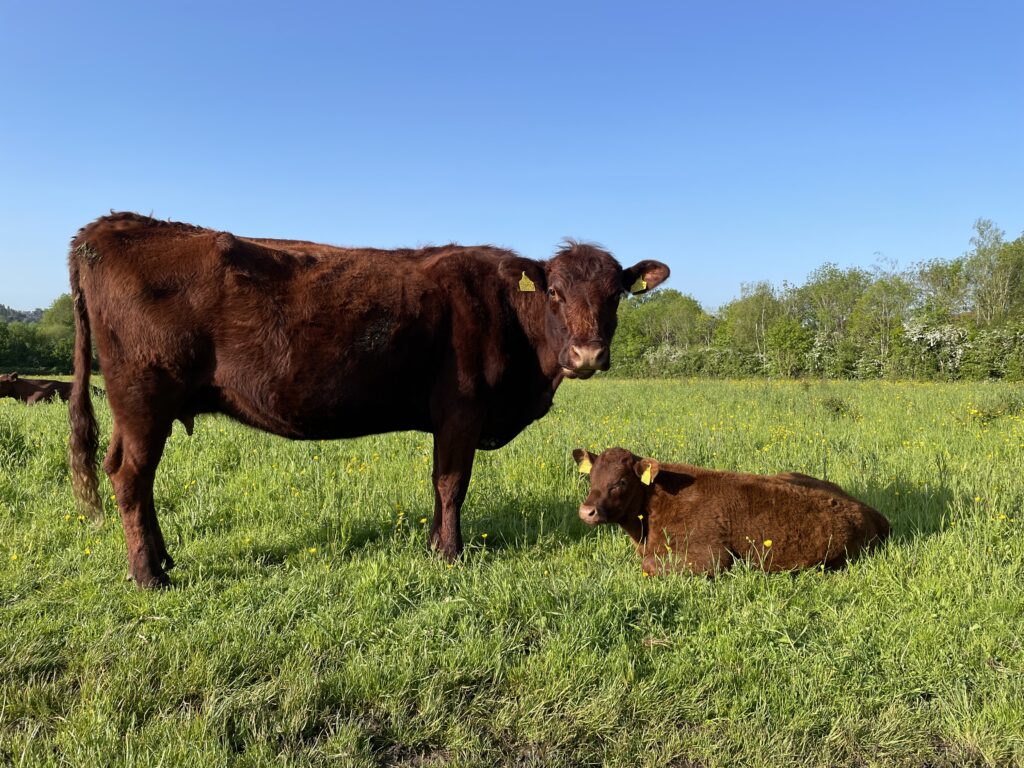
They are born hornless or “polled” as a result of the combined genes of the naturally polled Suffolk Dun with the weaker genes of the horned Norfolk Red. They have a naturally docile nature and are known to be pleasant to work with, making them ideally suited to conservation grazing sites with public access, where cattle without horns and of medium size, like the Red Polls, seem less of a threat to people unfamiliar with livestock. For example, at HWCP the Bull (tag number 262) is well liked by the Rangers and Lookerers (see definition below) due to his calm and amenable personality.
Their coat is a deep red, which is associated with heat tolerance in cattle, and they have good pigmentation in the areas around their eyes and on their udders, which prevents painful sunburn and reduces the risk of sun-related damage or cancer.
Crucially, they thrive on low input management and are an efficient converter of forage requiring little or no additional feed. They are not picky grazers and will readily browse trees and shrubs again making them ideal for grazing public sites.
Like all cattle, their front incisor teeth are just at the bottom of their mouths, not the top. They eat by using their tongues to grasp and pull grass into their mouths, where it is torn off by the lower incisors and a tough, leathery upper dental pad. The grass is then passed to the back of the mouth where it is ground by upper and lower molars and swallowed. Rumination then begins, where the partially digested food is regurgitated as cud to be re-chewed with their molars, a side-to-side grinding motion.
Their grazing results in a less selective, tussocky sward with varying grass height. This prevents the dominance of vigorous, competitive plants and allows more delicate wildflowers to grow. This mix of different lengths of grass provides ideal areas for ground-nesting birds like skylarks, particularly in Boat Field. In 2025, there were three cows, three calves, and one bull, and the herd rarely exceeds a dozen.
Cows normally weigh just over 500kg, while bulls can reach a weight of roughly 800kg meaning they can break up denser vegetation and create patches of bare ground, thereby helping the germination of wildflower seeds and providing micro habitats for invertebrates.
Their dung provides a rich habitat and food source for a wide variety of insects, which in turn supports bird populations.
British Primitive Goat/Ancient British Goat/Old English Goat
So much could be written about these goats that they warrant a book by themselves; the British Isle’s first ruminant, they descended from goats introduced around 5,000 years ago by the first farmers in the Neolithic period who crossed the land bridge from Europe.
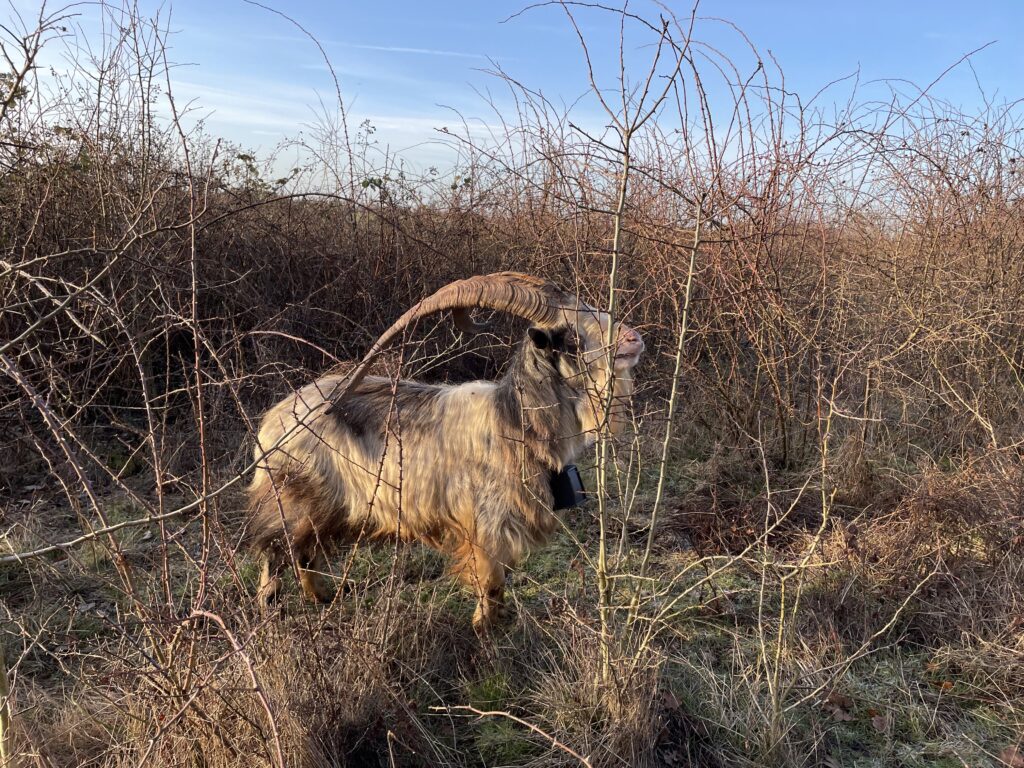
The Legacy Grazing herd has grown to over 150 animals and represents one of the largest single groups of the breed in the UK, with the total world population around 700. The maximum number of goats at HWCP at any one time is normally between 30 and 40.
The breed is classified as a “landrace” breed, meaning it evolved as a result of its environment, and subsequent pastoralist use, rather than rigid selective breeding for high yield. Therefore, the term “primitive”, in this context, doesn’t mean inferior, it means original and well-adapted.
A small, all-weather animal, it was invaluable to Neolithic subsistence pastoralists in providing milk, meat, skin, hair and tallow. It survived through the Bronze and Iron Ages, as it was so hardy and self-sufficient in foraging in rough, nutritionally poor environments, required little intervention from humans, and was good at evading predators.
The population crossed cultural lines during successive settlement by the Anglo-Saxons and by the Vikings. During the Medieval period it was the herding goat of the manor, whilst also “the poor man’s cow,” very common in rural areas for small families. Until about the late 1800s, almost every smallholding in Britain would keep a goat very much like the Primitive; hardy, manageable, productive enough for milk and occasional meat, and able to thrive on rough forage.
Until the late 18th century, it is estimated that there were at least one million British Primitives in England and Scotland, being the only variety of goat established in the British Isles up until that era.
But, just like the Red Poll, the native goat became less and less popular as agricultural practices shifted in the 19th century, and there was a significant movement in Britain to develop more efficient and productive livestock. The native British Primitive goat was considered too small, too hairy, and had inconvenient horns compared to the new imported breeds.
By around the 1870s, foreign hornless breeds from India, the Middle East, and Switzerland began to dominate, forming the basis of the modern, standardised British breeds, such as the Anglo-Nubian. These breeds better met the demands of modern farming with high milk yield, high-quality fibre (mohair, cashmere), and superior meat.
The result of these factors was that the original domestic British goat nearly died out in pure form, surviving mainly in a few feral herds, while the “improved” global breeds became dominant in modern farming. One of the most substantial colonies to survive was in the Cheviot Hills, hence “Cheviot Goats”. The modern names for the male and female goat have generally been billy and nanny respectively rather than buck and doe.
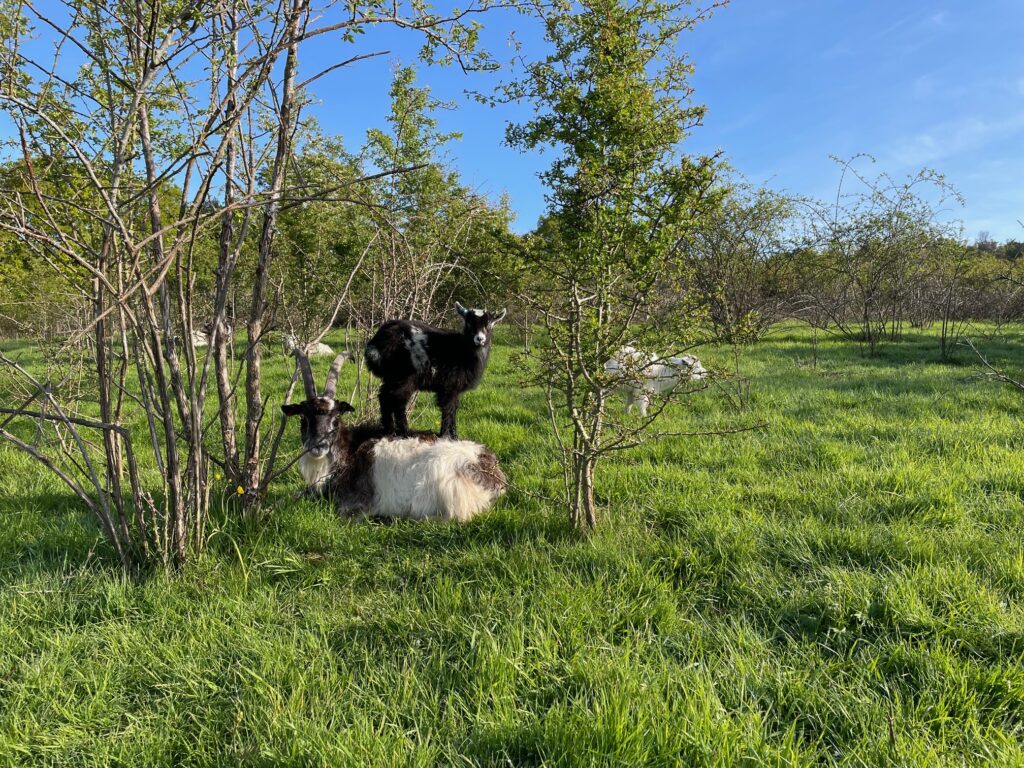
Goats will browse and graze. Their narrow muzzles and flexible upper lips allow them to be highly selective, and their agility enables them to stand on their rear legs to reach vegetation out of the reach of sheep. They are similar to deer in that they primarily browse on woody shrubs, bramble, thorn and trees, but when they need to they will eat practically anything. If you see the goats at High Woods grazing on grass then that suggests they have browsed their way through the higher, more desirable, vegetation.
Just like the Red Poll, they use their agile upper lip and lower teeth to pull and bite vegetation, which is then ground down by their molars and re-chewed as cud. This makes them particularly useful for managing scrub on open habitats and preventing areas from turning into dense woodland, especially in challenging, scrub-heavy environments like Farthing Bottom.
Hierarchy in Goats
Within the group, each individual has a place in the hierarchy and ‘knows his place’ being dominated by animals higher in the order than himself and in turn dominating those lower in the scale. In dominance relationships, the most important factor is age; kids approaching adults other than their mothers are butted away and quickly learn to be subordinate, leading to old animals, in general, being dominant over young ones.
The most dominant animal is not necessarily the leader of the herd as leadership is based on different criteria, the most important being the relationship between mother and young. The oldest nannies with the greatest number of descendants tend to become leaders even though the oldest and strongest males are usually most dominant.
The dominance relationships in the herd greatly reduce the amount of actual fighting that occurs between individuals since once the relationship is established it is long-lasting and mere threat gestures are usually sufficient to enforce the rights of the individual.
This behaviour may be connected with the possession of well-developed beards which the billies use as organs of threat—the animal having the best beard, therefore, intimidating his less well-endowed rivals.
Among the ruminants the goat is particularly odorous, the smell being mostly produced by glands situated immediately behind the bases of the horns. These are present in both sexes, but are only activated by the presence of male hormones in the blood stream; hence it is normally only the billy that stinks. The smell is greatly accentuated during the rut, when the billy often intensifies his natural odour by micturating upon his forehead, bending his head between the forelegs to receive the urinary spray.
Goat Age
In the same way that tree age is measured by the rings within a trunk, examination of the horn can allow an estimate of the age of the goat. A new segment is grown each year and so by counting the segments (see pic below) the age is known; the segments are separated by rings which represent the check in horn growth in the winter. Teeth also provide a guide to the age of a goat since the teeth appear in a regular succession over a period of years, until being ‘full mouthed’ at about 5 years old. Typically, these goats live for 15 to 20 years.
Lookerers
A team of volunteer stock checkers, or ‘’lookerers’’ has been set up at HWCP, so the stock’s health and welfare are checked every day, come rain, shine, or snow. The volunteers look for signs of ill-health or injury, but also check the gates, fences and the water supply, breaking the ice in the winter months. The lookerers can get to know individual animals very well, but stop short of handling them or feeding them in any way. Some of the goats have GPS collars, but often at HWCP, the lookerers can find the unseen goats simply by following the scent alone.
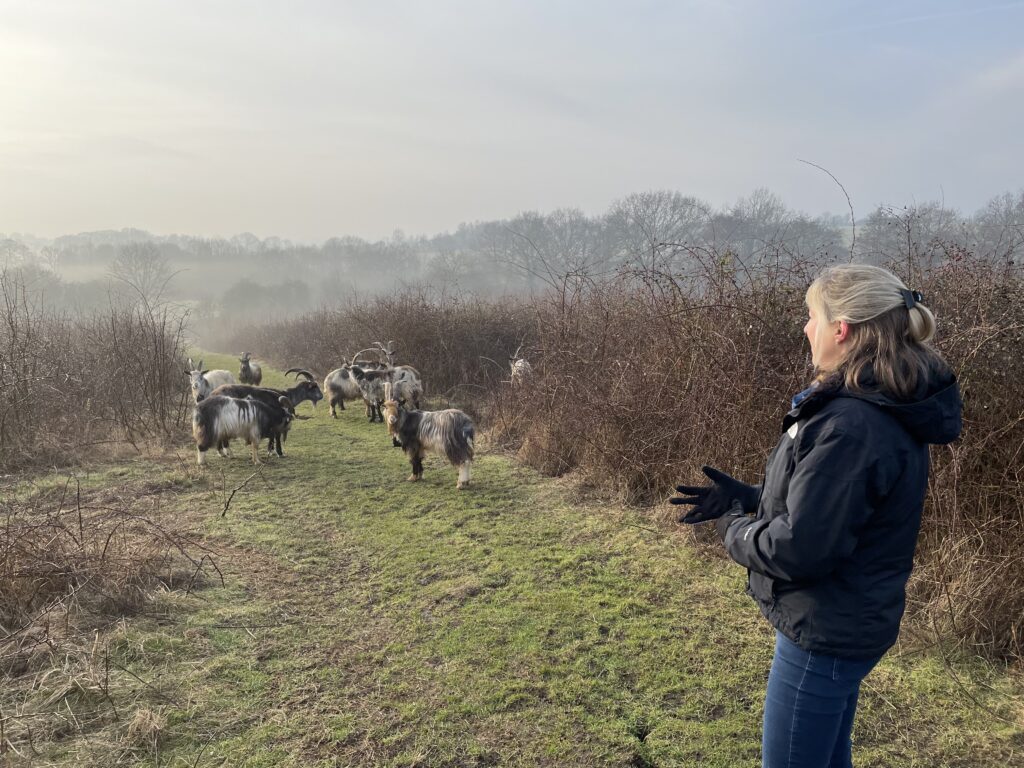
Cattle in particular, form close bonds with each other and can remember human and animal faces for years, and also recognize familiar voices and scents. Both cattle and goats are herd animals, and their welfare would suffer if they were isolated from their own kind.
Visitors to HWCP can help in looking after the welfare of the animals in various ways; please do not enter the fields when the gates are locked; please keep dogs under control and pick up after them; and please do not feed or pet the animals.
References:
High Woods Country Park action plan of works 2025-26
The Wild Goats of Great Britain and Ireland, by G.Kenneth Whitehead. Published 1972
“What is this life if, full of care,
We have no time to stand and stare.
No time to stand beneath the boughs
And stare as long as sheep or cows.”
from Leisure, by W.H.Davies, 1911