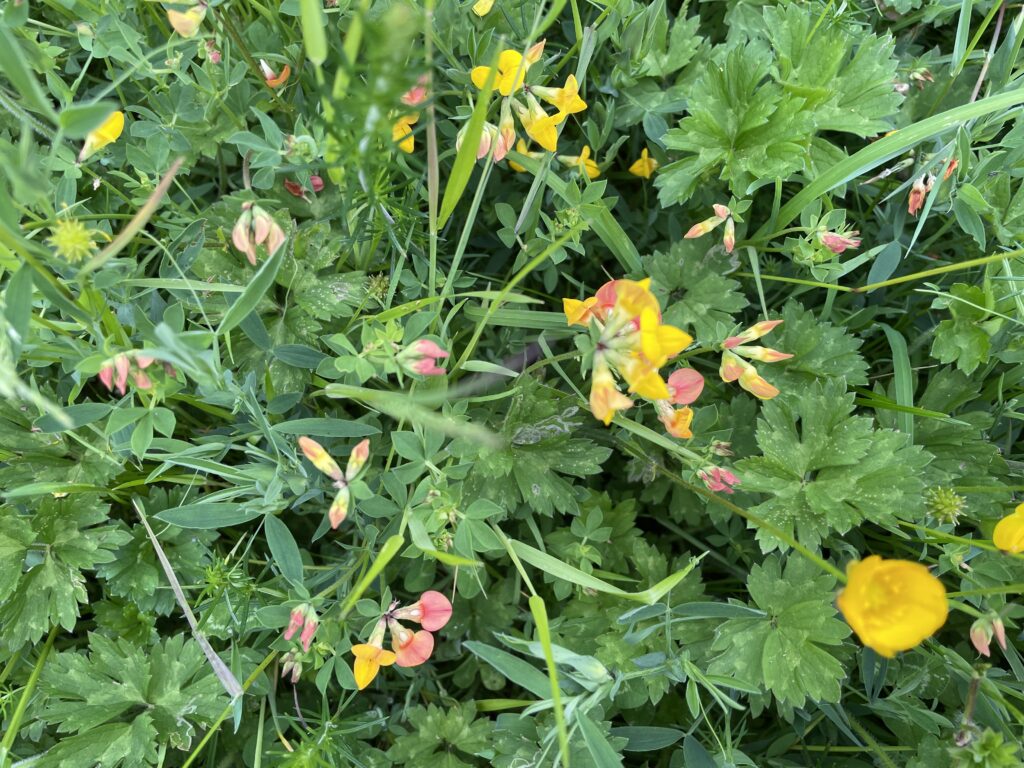
Grassland in Essex
At HWCP the focus of conservation grazing is on the grassland habitats, and the promotion of wildflower meadows. Grasslands in Essex have experienced a severe decline, largely mirroring the national trend where species-rich grasslands have decreased by approximately 97% in England and Wales since the 1930s. Exact numbers are difficult to identify but in the 1930s Essex had circa 300,000 acres of grassland, which means it has about 9,000 acres now.
This loss, driven by intensive agriculture, urban development, habitat fragmentation and a lack of appropriate management, is a major biodiversity crisis, not just in Essex, but throughout the country.
The decline has a devastating impact on wildlife, as species-rich grasslands support a vast array of flora and fauna, including wildflowers, plants, fungi, and a huge number of invertebrates like bees, butterflies, and grasshoppers. Many of these species are now at risk of either local or national extinction.
In 2026 1 in 3 bites of food globally, exist because of pollinators. Quite simply, more pollinators = more food security.
What this means is that in 2026 Wildflowers are not a “nice to have”, instead they are essential due to their symbiotic, mutualistic relationship with pollinators, which in turn are vital to the ecosystem that supports human life. We need the pollinators just as we need the ecosystem, the food chains, the soil webs, and everything else it takes to be able to grow food sustainably in the long-term. Healthy, thriving, wildflower meadows are, therefore, a reservoir, or a mother lode, for biodiversity. Plus, a wildflower meadow in summer is a beautiful thing to experience.
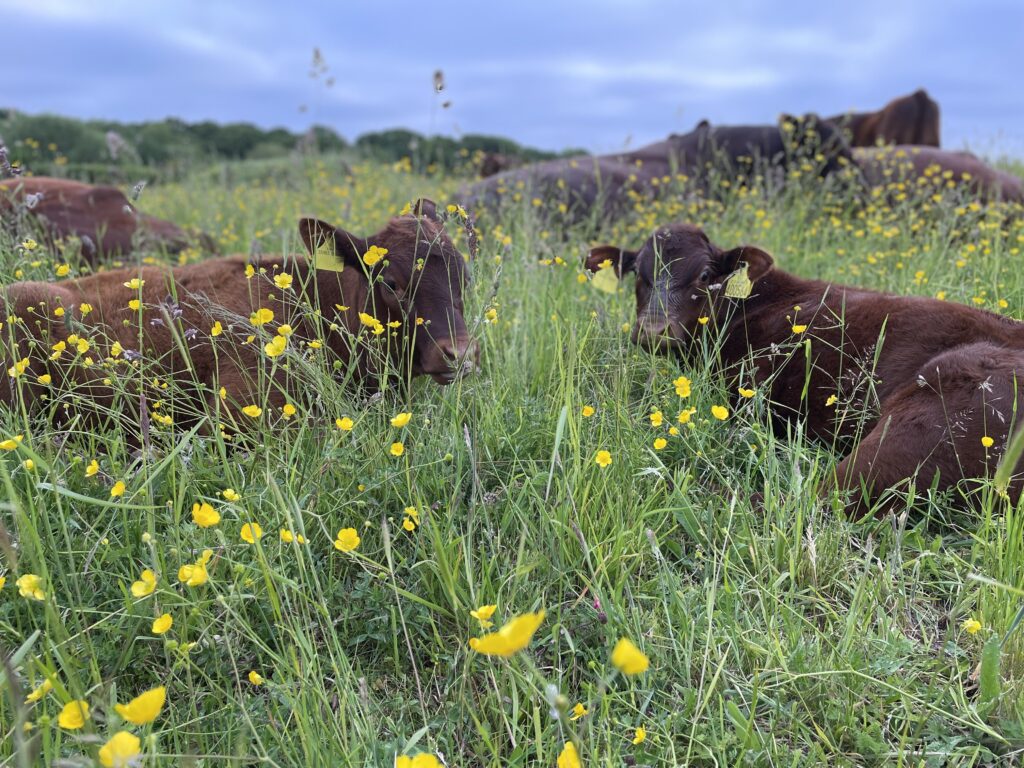
Grassland at HWCP
All the southern meadows were arable fields in the past, the last crop to be sown being Borage. Once the area became a country park the fields were sown with a wildflower seed mix. The fact that HWCP is now home to approximately 50 hectares (123 acres) of grassland, makes it vitally important, as it represents more than 1.35% of Essex’s total on a site that is only 0.02% of the area of Essex itself.
This grassland appears mainly on the slopes to the south – which, for many years, was maintained by a local farmer for hay and grazing on an ad hoc basis. In January 2017 this was replaced by a formal Farm Business Tenancy Agreement with the Legacy Grazing Project, an initiative set up in conjunction with Essex County Council with a mission to conserve scarce wildlife and landscapes to help local authorities and other organisations demonstrate a positive commitment to England’s Biodiversity Strategy by:
- Explaining and promoting the role played by grazing animals in shaping the natural and historic environment
- Providing volunteering opportunities to local communities
- Achieving the highest standards of animal welfare
Under this initiative, Boat Field (Compartment F2) and Old Ley Field (F1), are managed as summer wildflower meadows and grazed in rotation by the cattle from April onwards. Rotating livestock between compartments allows forage in each area to recover between grazing periods, promoting healthy regrowth and preventing overgrazing.
Farthing Bottom Field (F3) has become particularly scrub encroached since the time of the pandemic, so Legacy Grazing introduced goat grazing in October 2022 to restore this meadow. The process will take several more years from 2025, before hopefully reverting back to using cattle grazing as the main method of meadow management.
The ‘Southern Meadows’ fields (D1, D2, D3) do not host stock, but are mechanically cut for hay once the Skylarks have fledged from their nests.
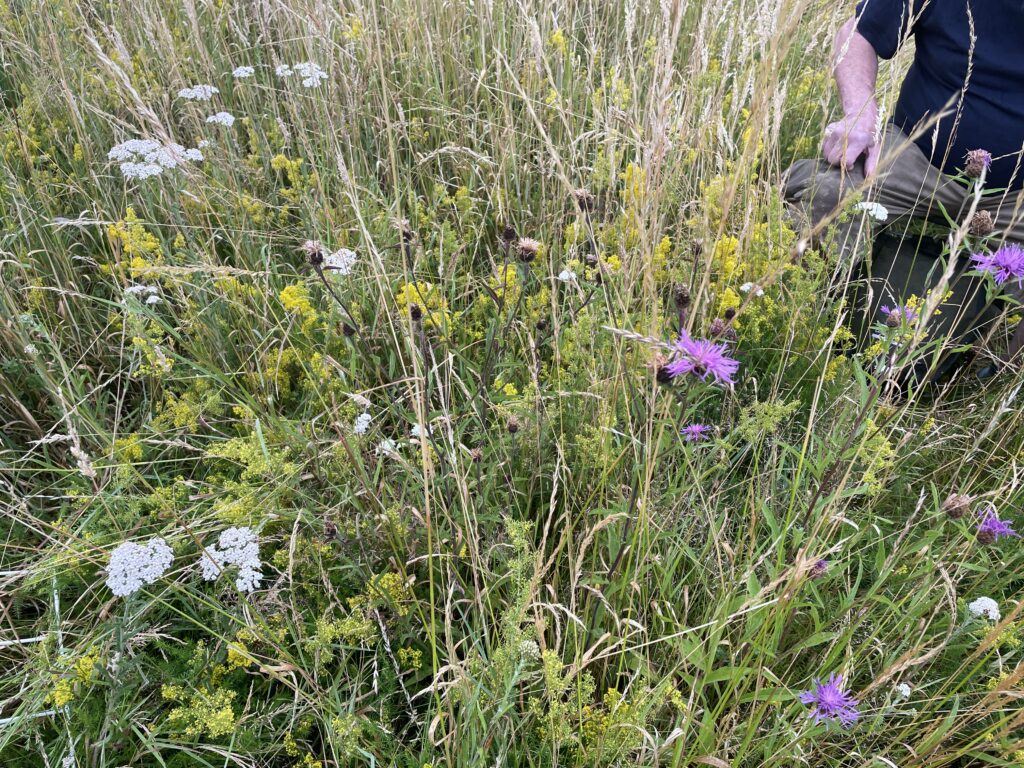
The field to the north-west of the site, Compartment G, known as Squirrels Field, is also managed for species rich grassland. It is a very busy field in terms of footfall, not enclosed, and so not suitable for conservation grazing currently. In 2024, circa 30 new trees were planted on this site, as part of a more trees initiative.
Meadow Condition surveys are carried out annually by volunteers on each of the Grassland compartments at HWCP and for a meadow to be ‘in favourable condition’ it requires to pass the following criteria:
- Cover of wildflowers to be more than 20%
- Bare ground to be less than 10%
- Cover of invasive trees / shrubs less than 5%
- Cover of indicators of water logging to be less than 30%
- At least 2 positive indicator species to be frequent and at least 2 positive indicators species to be occasional e.g. common agrimony, bird’s-foot-trefoil, black or common knapweed, lady’s bedstraw, meadow vetchling, field scabious, ox-eye daisy, pepper-saxifrage, ragged robin, agrimony, field scabious.
- Cover of undesirable species/negative indicator species less than 5% e.g. creeping thistle, spear thistle, curled dock, broad-leaved dock, common ragwort, hoary ragwort, common nettle, cow parsley, bristly oxtongue, creeping buttercup, white clover.