The term ‘a mosaic of habitats’ entered the Conservation lexicon in earnest this century, following the acknowledgement of the climate and nature crises, as the need to make the most of our natural places became ever more important.
It describes a landscape composed of distinct yet interconnected patches of different ecosystem types, e.g. woodland, natural regeneration, scrub, grassland, wetland etc. It doesn’t have to be at a landscape scale, it is just effective on any area, including of course domestic gardens.
The outcomes from a mosaic of habitats are the most effective way to optimise the available resources for the benefit of nature. The opposite of a mosaic is a monoculture, which is anywhere that is dominated by a single species or habitat, for a hackneyed example, blocks of single-species, same-age, conifer.
For many Conservation NGOs (e.g. the Wildlife Trusts) a mosaic of habitats is now the go to vision for the ideal outcome on the ground, and informs the plan for how a site can not only survive, but thrive.
One of the drivers for this is the facts around habitat loss – for example in Essex we have lost approximately 98% of our Grassland over the last one hundred years, and between 70% to 80% of our Ancient Woodlands over the same period. This is due to urban growth, intensive agriculture, fragmentation, and lack of appropriate management. But above all, it is because we simply don’t value our green spaces enough, we think they belong to nature, but haven’t realised that we are nature.
At HWCP a recurring question is “why aren’t more trees being planted on the open areas?”. HWCP has been subject to quota driven tree planting initiatives as part of central or local government targets over recent years, where politicians have looked at the maps and pointed to open areas which look suitable for their ‘green credentials’ photoshoot. Of course, trees are wonderful, trees are vital for nature, but just as vital is having the right tree in the right place at the right time.
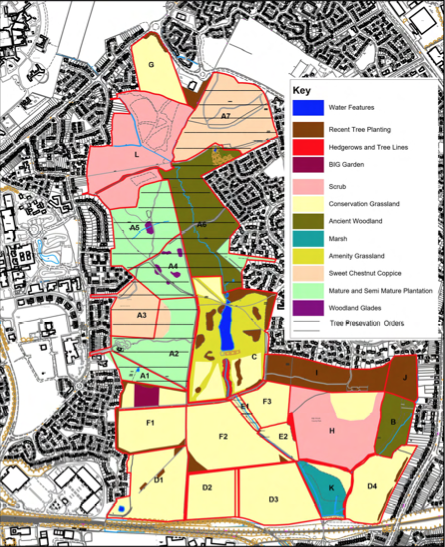
HWCP compartment map showing habitats
In theory, the whole site at HWCP could be turned over to a monoculture of woodland, with new trees planted on the existing open areas, or the entire site left to self-regenerate. However, unlike a mosaic of habitats, that would simply not provide the optimum sweet-spot for nature that is required in 2026. At HWCP now, its not about reaching for a perfect result, its about doing the absolute best that we can with the spaces and resources available to us,
To illustrate the mosaic effect, the first photo below shows the SE corner of the site in 1946, with two distinct habitat blocks, one of Ancient Woodland at Friar’s Grove, and the other being fields for hay, and grazing.
Compare this to the second photo, which shows the connectivity between blocks of woodland plantation (circa 1988), scrub, grassland and in the bottom, centre, a new marsh area. This area was ‘designed’ to include these habitats, back when HWCP first came alive, and are now all connected by a much more resilient network of hedges (with hedges being a separate habitat in themselves). In 1946 there would have been no Nightingales in the footprint of this photo, because their habitat simply didn’t exist, but in 2026 they have been heard again in the scrub near the marsh area.
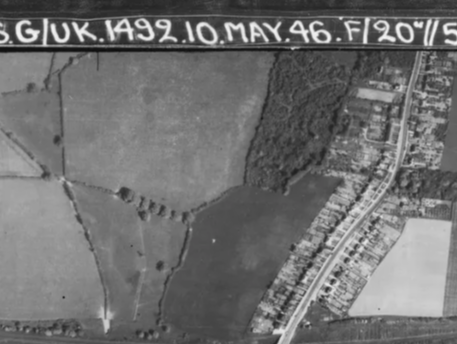
Aerial photo May 1946 (Ipswich Road running N/S to the left of the picture)
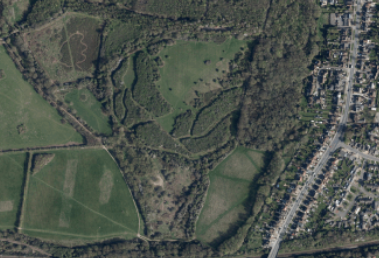
Aerial photo from circa 2022 of same area
In the photos below we can see how the habitats have changed, with open farmland changing to new woodland, and grassland.
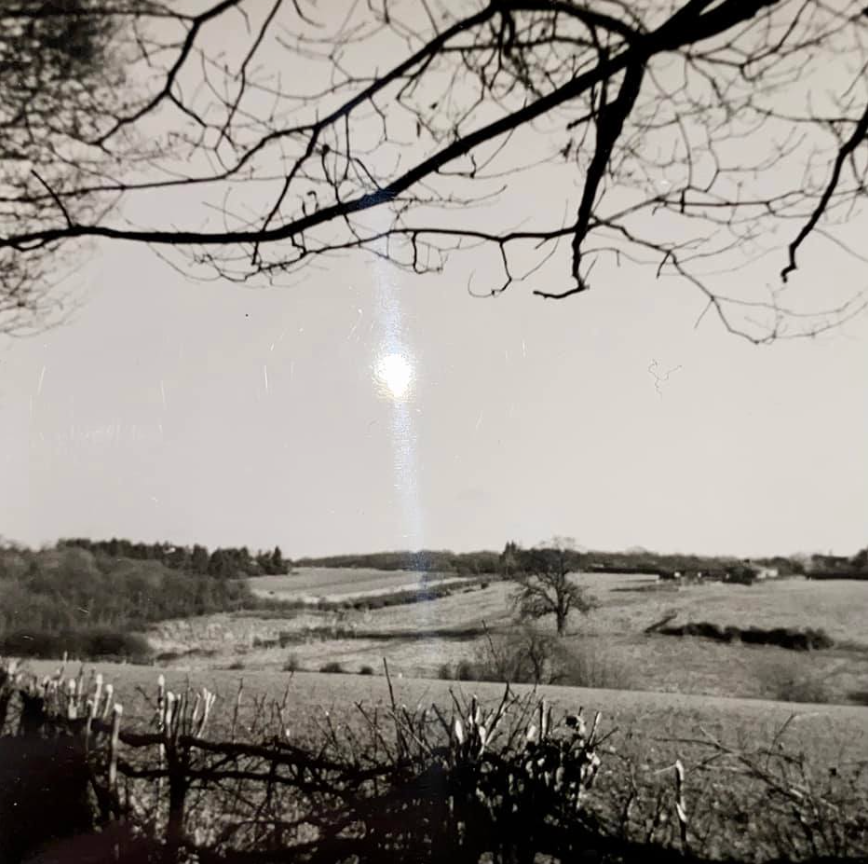
View from the Lake Path looking across to Myland Hall and its outbuildings, pre HWCP and pre-lake.
(NB: When the outbuildings were demolished the rubble was used to form the bund at the southern end of the lake). Photo Source:Internet.
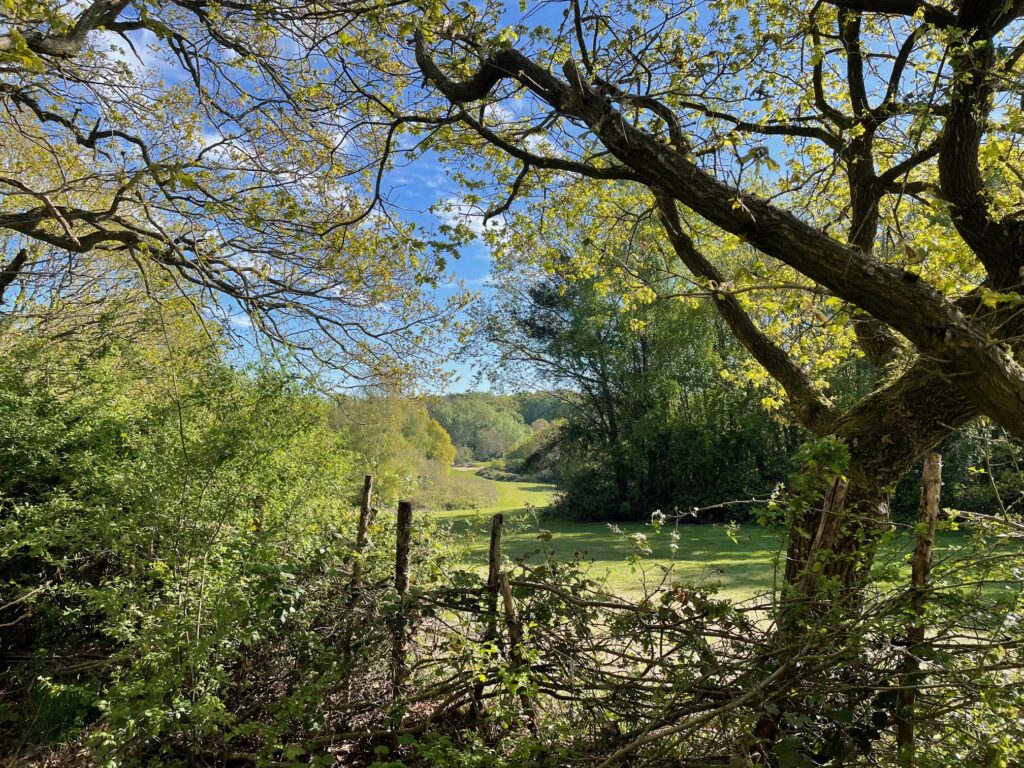
This photo from the same position in April 2026
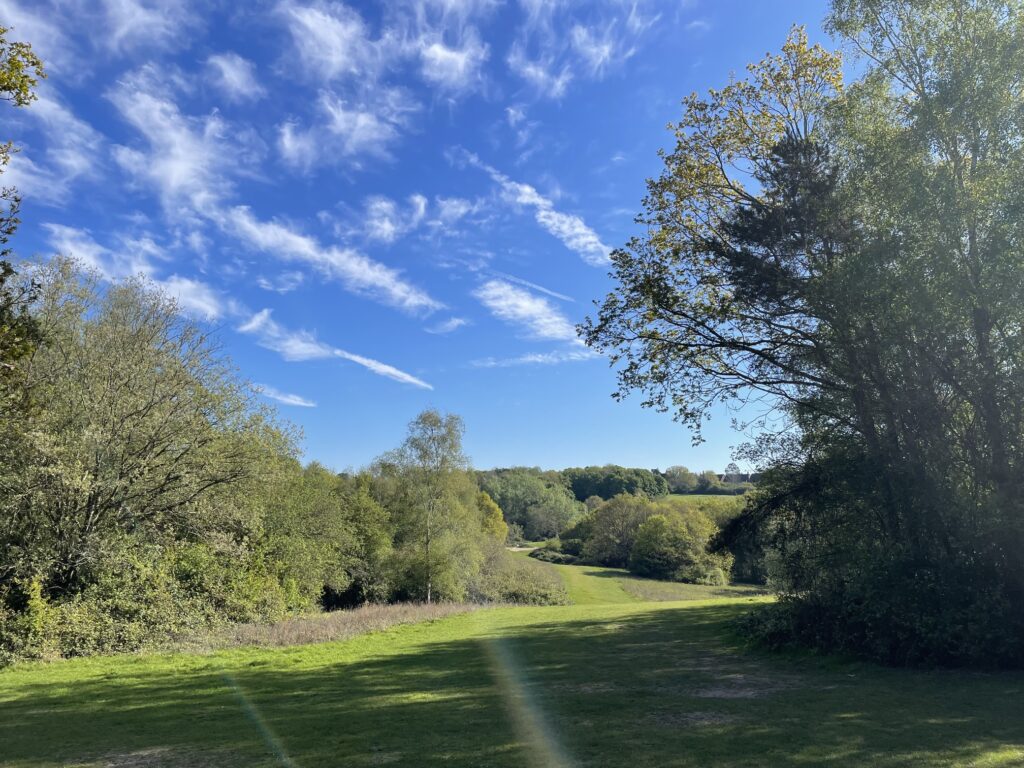
And this one from just in front of the hedge to more easily compare with the older photo.
Ecotones – Vitally, a mosaic not only helps different habitats to stand alone in their own compartments, but its real superpower is that it also creates buffers and edges, or ‘ecotones’, in the liminal spaces between the habitats. Looking at the photos again, the increase in edges is clear to see.
An ecotone is an area where two habitats meet, essentially forming a new habitat in the process. Nature loves the scruffy edges as they are the places where biodiversity thrives. At the edge of the trees, and in clumps and hummocks in the middle, wild things that would be too exposed in the open, can hide, forage and retreat, Birds feed in the open areas and collect insects or fruit, and then return to the cover of the trees where they roost.
The pictures here are typical of the footprint of HWCP, there being countless ecotone zones, with gradients tapering from ancient woodland, more recent plantation, natural regeneration, scrub, to grassland and open areas, and then back up the other side again.
Almost all of these are by design, and under care and management by the Rangers and their team of volunteers. They provide the best opportunity for higher biodiversity and increased resilience, as well as natural buffers, and wildlife corridors.
A core part of the ecotone spectrum is bramble. Often misunderstood and undervalued it provides a myriad of benefits for nature, including shelter, nesting spaces, food, pollen, nectar, and can also serve as protection for young trees – it is often referred to as ‘the cradle of the oak’. Of course, it will spread quickly, so it needs to be managed within the context of the overall mosaic, but if you want to see probably the biggest range of birds, insects, invertebrates, and mammals in any particular area, just spend time around bramble.
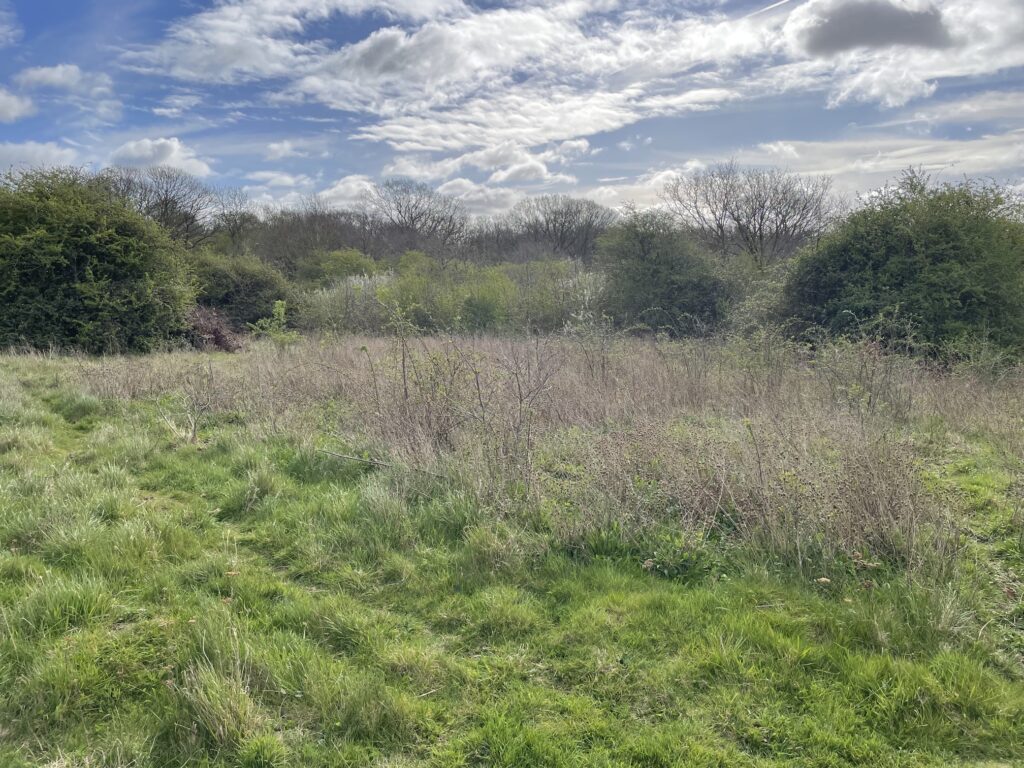
Woodcock Down, 2026 – it is challenging to capture the mosaic of habitats from ground level but here are the taller trees of the Ancient Woodland in the background tapering down through scrub and bramble to the open grassland.
Ecotones trigger the “edge effect,” where they host species from both adjacent habitats, along with specialised “edge species” that thrive only at the boundary, resulting in higher overall biodiversity.
Because ecotones contain a wider variety of species and complex habitat structures, they also tend to be more resilient to stressors such as disease, climate shifts, and natural disasters.
And of course, these zones, and hedge-lines, act as important highways for animal movement, allowing them to travel, feed, and find mates across a wide area.
Coppicing for nature – Coppicing is perhaps the oldest ‘industrial’ technique known to man and can be dated back to the Stone Age at least. To ‘coppice’ means to repeatedly fell dormant trees at the base (usually in late September to early March) and then allow them to regrow.
Not only does this provide a sustainable source of timber, the root systems that have already developed in felled trees speed up the regrowth process, and make the trees less susceptible to shading (so that more light reaches the forest floor). It can be a shock to see a newly coppiced area, but its a hugely positive experience for the tree – it effectively keeps the tree young and healthy, and constantly regrowing.
A constant source of sustainable wood is only one benefit of coppicing as it also greatly enhances biodiversity and ecological resilience. Coppicing’s real superpower is that it opens up the tree canopy to allow light on to the woodland floor, creating a mosaic of different-aged trees, plants and flowers, which in turn lead to the creation of a diverse range of microhabitats.
At High Woods Country Park in 2026, the open, sunny, scallop-shaped glades now created from coppicing by volunteers are ideal for light-demanding wildflowers and other understory plants, which in turn attract specific pollinators and insects, which in turn provide food for birds and mammals.
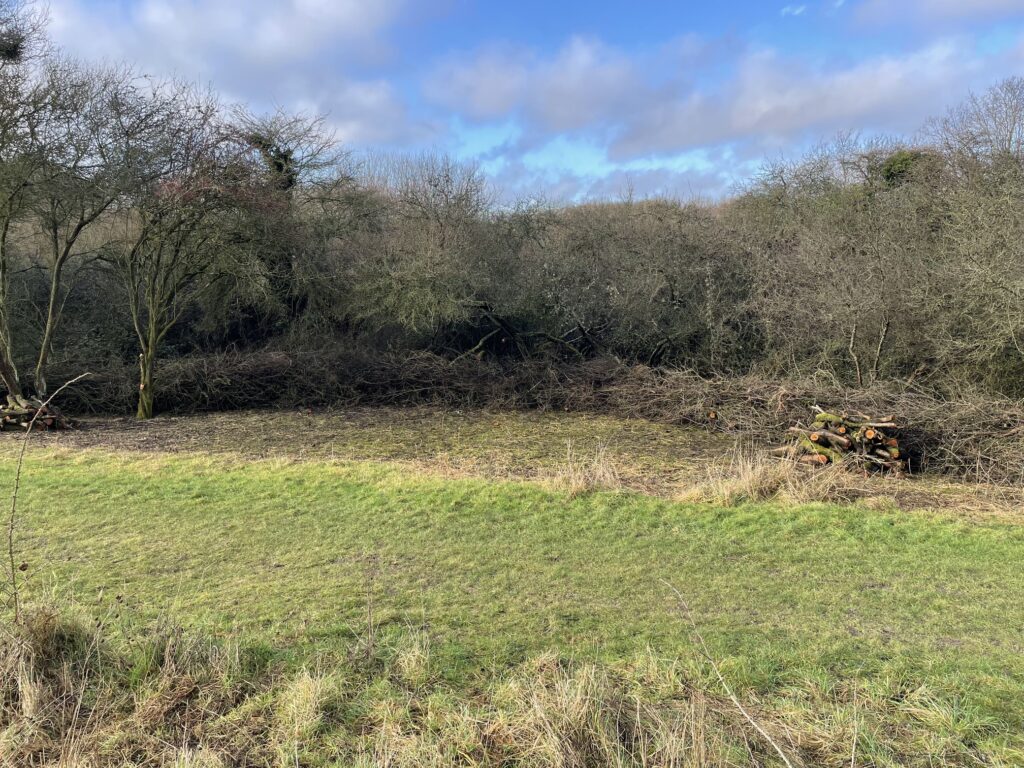
Marsh Area, 2026 – an example of volunteers achieving a scallop effect by coppicing scrub into a dead hedge. Typically a deadwood pile of the thicker stems will be left for invaluable micro habits, such as here to the right,
Additionally, different stages of the coppice cycle (newly cut, young regrowth, mature stems) create a variety of microhabitats for various wildlife species. Coppicing also mimics natural disturbances like fallen trees, creating dynamism via constantly changing environments that support plant species typical of early regrowth.
At HWCP, much of the larger scale coppicing over the years has previously been done by contractors, often at nil cost in a quid pro quo arrangement where the contractor takes the timber in exchange for the work. Tree felling contractors rarely offer to coppice wood at nil cost in 2026 because the economic, operational, and market conditions that once made this viable have vanished. This means that as at 2026, much of the HWCP Chestnut coppice areas are in need of re-coppicing.