Across Colchester in early August 1940, there was growing talk of invasion. Clacton, Frinton and Walton, which only three months before had been hoping for a ” season” of sorts, were now becoming deserted, shuttered towns.
The Battle of Britain was now in full flow, and while North Essex was never ” in the front line,” the German attackers were beginning to shower the district with bombs to lighten their load as British fighters and Anti-Aircraft fire chased them from London.
Bombs dropped on High Woods, 1940
On August 16, 1940, almost 100 bombs fell in fields round Langham and Boxted, and on the 19th Colchester was bombed in daylight for the first time. The only casualty was a workman at the Hythe who omitted to take cover and suffered slight shock.
At 3.30pm in the afternoon of August 19, 1940, high explosive bombs were also dropped harmlessly in the East Wood, Mile End Chase area, by a solitary enemy raider. Two hours later a second raid was made by a single machine, which dropped more bombs on the Moler Works, Hythe.
An eye witness from the time remembers “about 20 bombs being dropped across Eastwood on a sunny day in August 1940. 1 or 2 landed near what is now the Chanterelle Car Park, and another at Brinkley Grove.” There were several craters from these bombs, one of which can still be seen a little way off of Myland Hall Chase, with the rest having been built on.
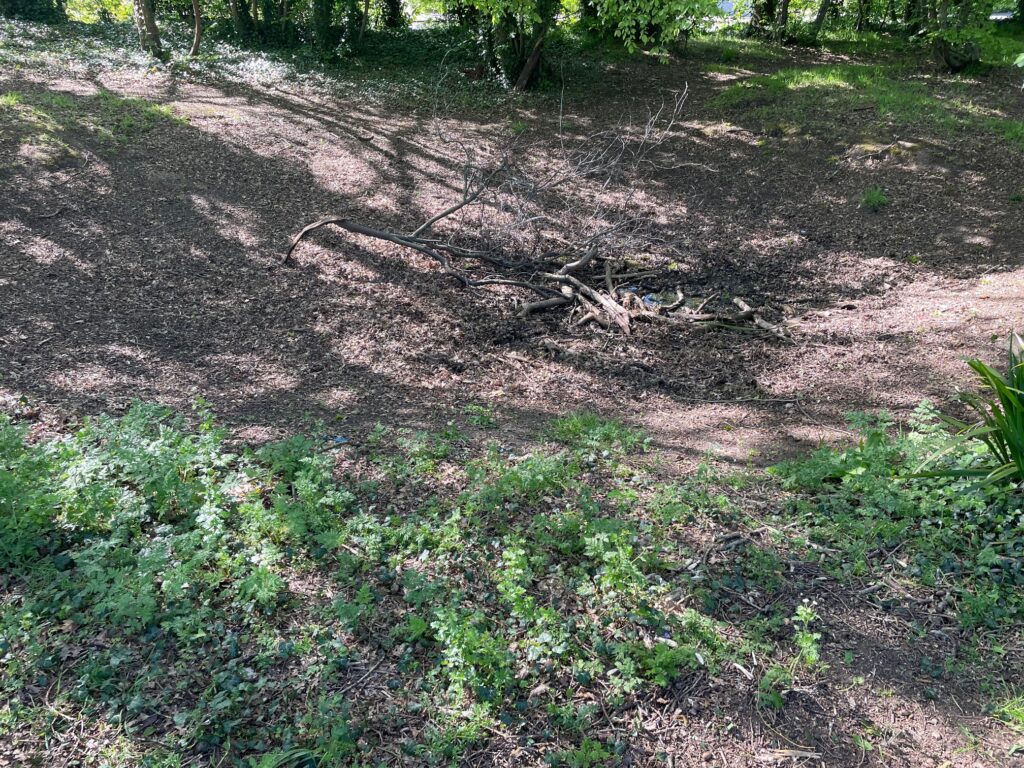
Crater near Myland Hall Chase, May 2026
The Essex County Standard recorded that “a total of nine bombs were dropped by a Dornier, and direct hits were made on Brown and Son Ltd. and Moler Products Ltd., with Spottiswoode and Ballantyne suffering damage by blast. No persons were injured, and although damage was fairly extensive production at the above works was not affected.”
These were Colchester’s first raids of the war. The Air Ministry’s communique on this day’s raids in England described them as “intermittent attacks by aircraft operating in small numbers.” An eyewitness called them the “tip and run” variety, the plane appearing from the clouds and dropping a few bombs as it made off homewards.
The following afternoon, in bright sunlight, a tremendous battle raged over the town, and at one time burning planes could be seen to East, West and South simultaneously.
Boxted Airfield, 1941
The Boxted Airfield Historical Group operate the museum, manage a very interesting website, and have published a book about the Airfield. For far more detail please visit their resources, but a brief summary of the site follows.
Construction of the airfield started in 1941, with the removal of fruit orchards, on part of the old Severalls Estate. The first occupants were the USAAF 386th Bomb Group, flying Marauders, who arrived in June 1943. Their role was to destroy strategic targets such as airfields, convoys, tanks, trains etc.
The USAAF 354th Fighter Group then came to Boxted in November 1943, flying the new Merlin engined P51b Mustang. Their primary role was to escort long-range bombers on their missions over the continent and eventually all the way to Germany.
The 354th then moved to Kent to prepare for D-Day and were replaced by the USAAF 56th Fighter Group, again in Mustangs, on 19th April 1944. The 56th are generally acknowledged as the top scoring US fighter group of World War Two and flying from Boxted took part in D-Day, and the Battle of the Bulge.The airfield finally closed in late 1947.
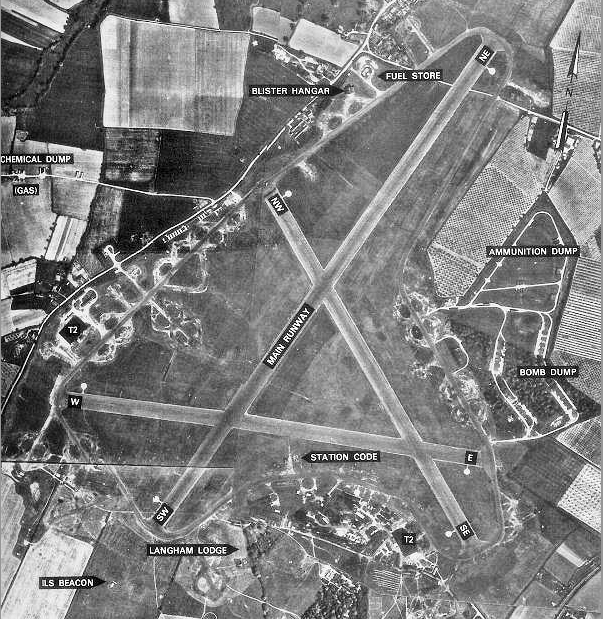
The main runway runs South West to North East and directly lines up with High Woods, so most of the planes would have flown over the woods, either on take off or coming into land.
The Airfield was home to a relatively large number of service personnel at this time and some of these were based in East Wood under canvas and others in High Woods. The latter was known as the ‘Roundabout’. The tents are remembered as being “luxurious” with concrete slabs for a base.
Bombing of Severalls, 1942
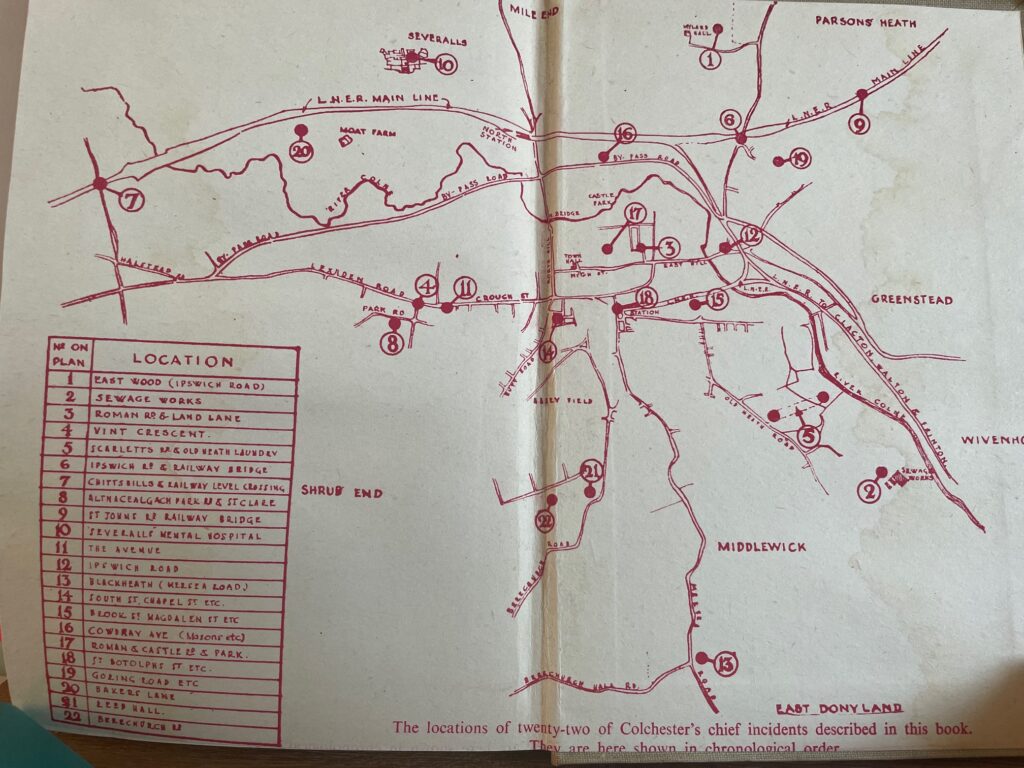
The most tragic event of all the bombing in Colchester was that which occurred in the early hours of Tuesday, August 11, 1942.
Then, just after an alert had been sounded, there was gunfire, and a German plane dropped a stick of bombs on Severalls Mental Hospital (its official title than), causing no fewer than 63 casualties. Of the four 500lb. bombs which fell three scored direct hits on the west block (for senile and infirm women) and on the laundry.
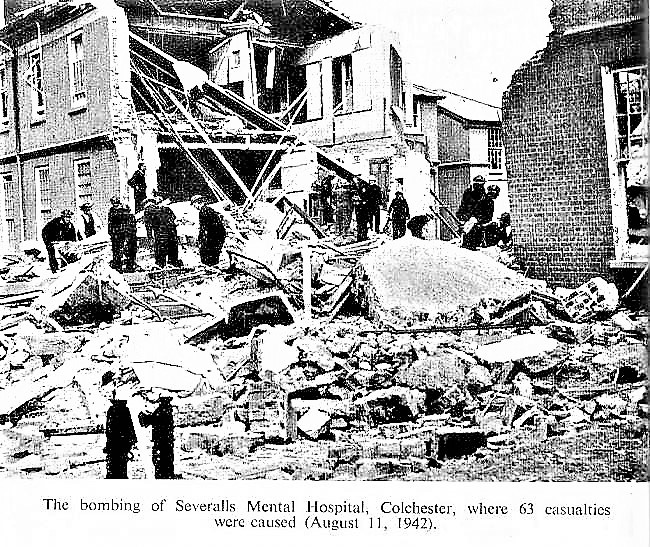
Photo from Internet, photographer/credit not known
The fourth, which fell near the nurses’ homes, fortunately did not explode. The result was that 38 patients were killed,23 others were injured, along with 2 members of the nursing staff. Berlin announced the next morning that Colchester and Hastings were the targets, and that the attack was directed against “military objectives”.
Throughout the night, and all the next day, rescue workers toiled incessantly, searching for bodies under the debris, and there were many heartrending scenes.
On August 13, 1942, the Commissioners of the Board of Control paid this tribute to the rescuers: —
“We have great pleasure in placing on record here our tribute to the courage displayed by the women nurses, whose behaviour in a moment of great stress and danger was beyond praise. Rescue parties of the doctors, male nurses and artisan staff gave valuable and speedy aid to patients buried in the debris and the Colchester A.R.P. Services were also quick on the scene. and performed their duties with the greatest efficiency. It speaks well for the administration of the Hospital that its whole organisation, with the exception of the laundry, appeared to us to be working normally today.”
The Commissioners disclosed that the task of the nurses was considerably simplified by the calm demeanour of the patients, and they added:- “In thanking Dr. Duncan and his deputy, Dr. Brookes, for their very helpful attitude towards us today we would also wish to express to them, and, indeed, to the whole staff, our sympathies in the ordeal through which they have passed, as well as our admiration for their courage and devotion to duty.”
Later the London Gazette” announced that one of the nurses, Mrs. Muriel May Jackson, had been commended for brave conduct in civil defence. It was recited that Nurse Jackson was the first to arrive at a first-floor dormitory where many of the patients were injured. The way was blocked by debris so high that she could not see what was beyond it, but she went over this alone, and with a light from a small torch, attended the wounded. When the doctors arrived, she showed them how to avoid part of the debris through which she had fallen and assisted to bring out patients.
The Medical Superintendent said he could not speak too highly of the coolness and courage shown by the nurses that night.
Unexploded bomb 1943
An eyewitness recalls an unexploded bomb landing in the SW corner of Brinkley Grove in 1943. The bomb, apparently 1000lb, was dug out and removed but the crater is still visible and clearly incongruous to the terrain around it. TM0014427896.
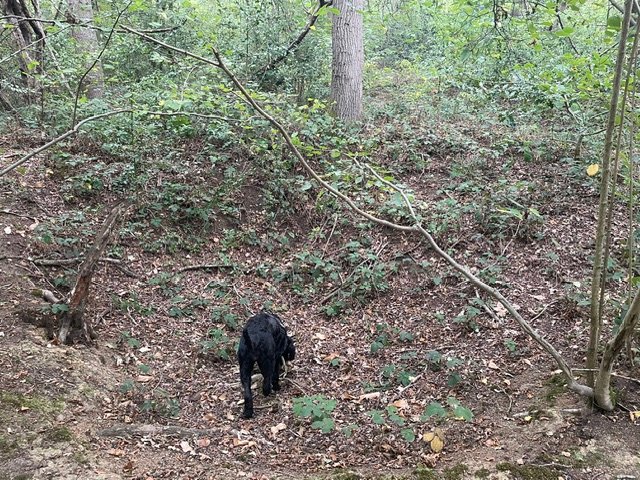
Bomb crater, Brinkley Grove, July 2026
V1 Flying Bomb crater
A visitor to the Country Park in 1993 remembered a V1 (Doodlebug) landing and exploding on the southern slopes one summer day towards the end of the war. She was a child picnicking at the time, and the area that she pointed out does have an unnatural depression within it. Grid Ref TM0017926653.
Anti-Aircraft Guns
According to separate eyewitness recollections there were anti-aircraft guns installed in one of the fields near to Braiswick Farm.
The Summing-Up
In terms of air attack, across nearly six years of war Colchester had seen:
1,800 bombs dropped
54 people killed
100 people injured
50 houses totally destroyed
1,750 houses damaged
1,094 air-raid alerts
References:
Essex At War, Compiled by the Editorial Staff of the Essex County Standard and edited by Hervey Benham, 1945
Myland Parish Council records
Boxted Airfield website, boxted-airfield.com