Man’s use of horses in woodland is an ancient craft that goes way back; it is almost certain that the Romans would have used horses in High Woods when/if they constructed their route through the Central Valley.
Horses, oxen or donkeys were the original “Forestry Machinery”, and for centuries, long before the advent of heavy, fossil-fuelled mechanical machinery it was often the only way to efficiently (when compared to manpower) extract timber from woodlands.
The process of a horse pulling timber behind it is called snigging. This is done by using a traditional harness, and a swingletree, which is a horizontal bar, attached or suspended in the middle, and able to pivot in a horizontal plane. The traces (the straps by which the horse pulls the load) attach to the ends of the swingletree, and the load is pulled from the centre point.
For centuries, snigging was an everyday sight in our woodlands but then in the same way that the image of a ploughman behind his horse and plough has faded from view, so too has the sight of a horse at work in a wood.
The effects of intensive agriculture, the voracious appetite for timber since the industrial revolution, and the invention of large machines to extract it, all conspired to render snigging by horse on a large scale not economically viable.
But they are still used, and there is a thriving Horse Logging network that typically work on steep sites where machinery cannot get to, and sites where biodiversity, and habitat management, are the main drivers. Snigging wood by horse is a very low impact method of timber extraction.
This horse, a Suffolk Punch named Holly, took part in a practical demonstration of horse logging in the central valley in the early 2000’s.
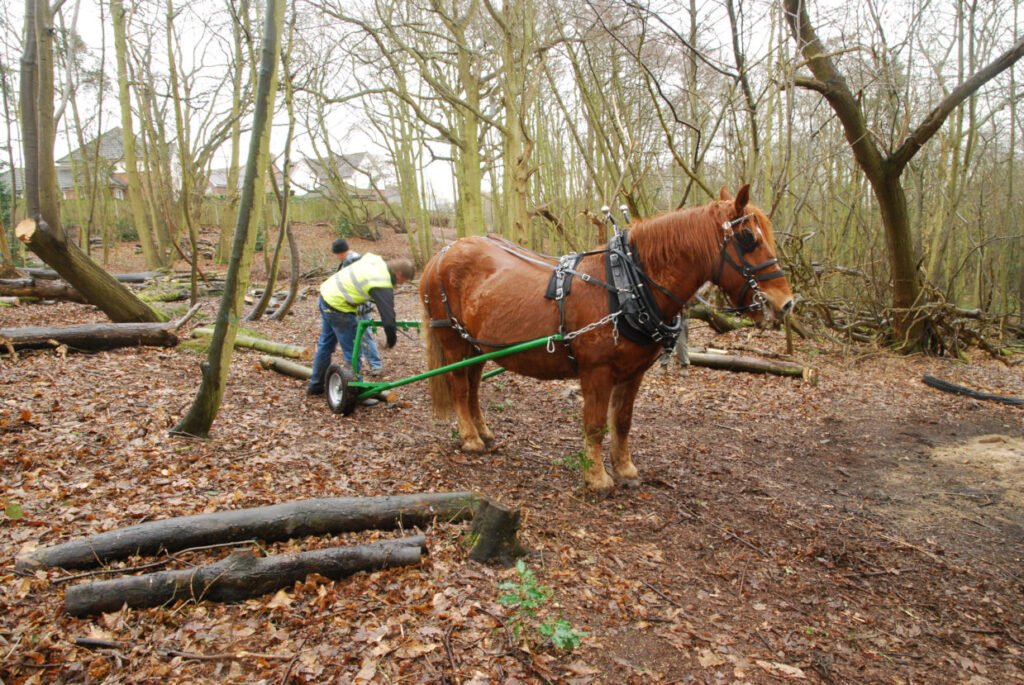
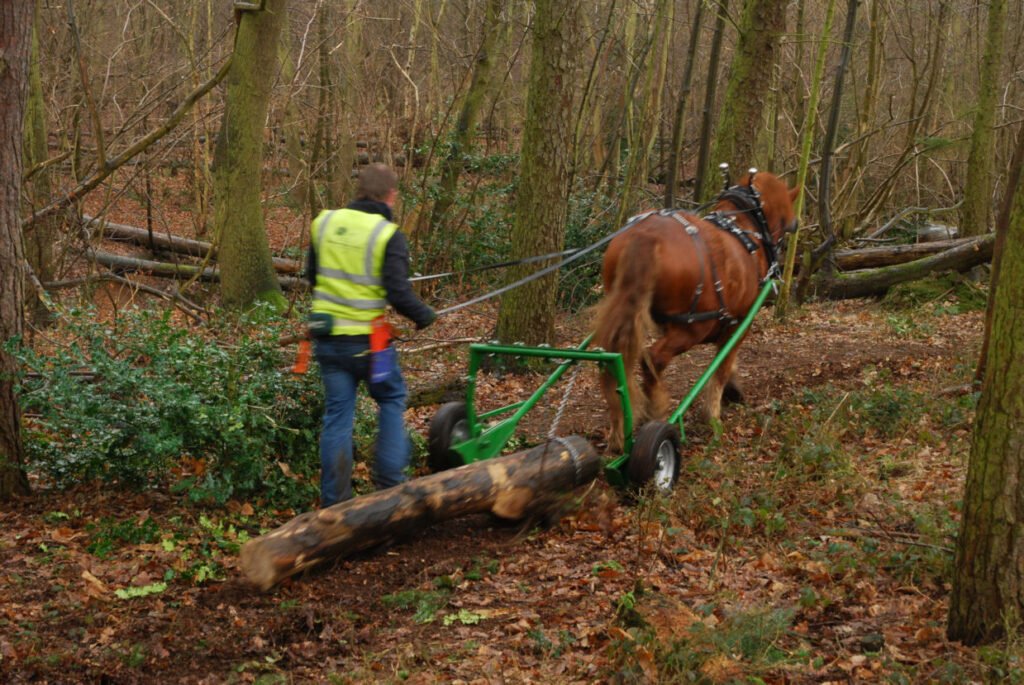
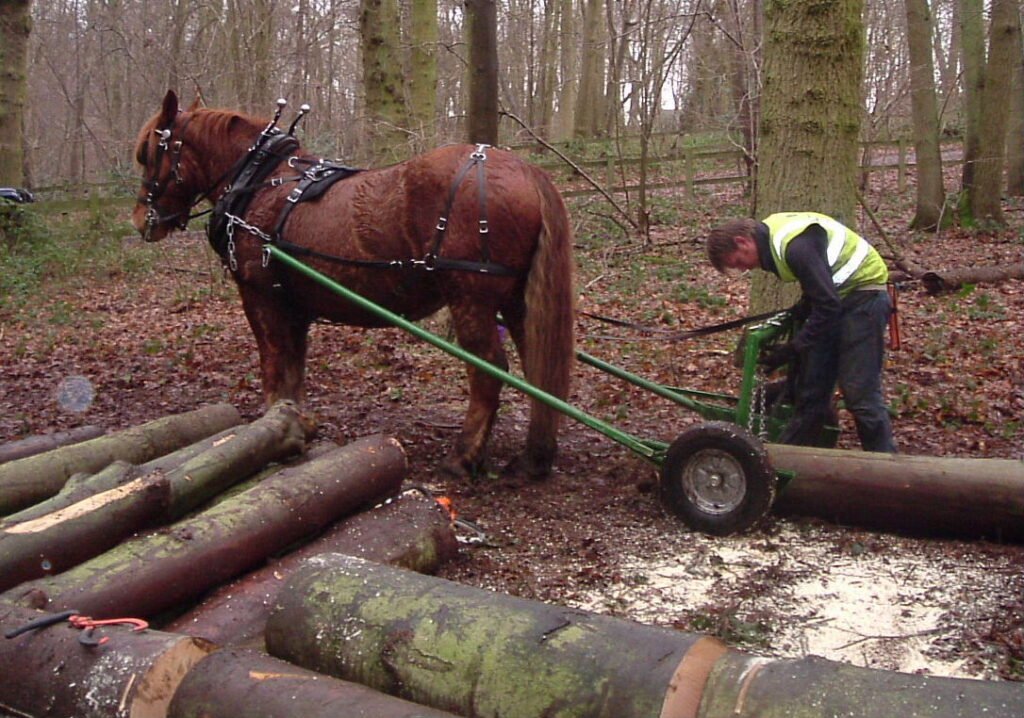
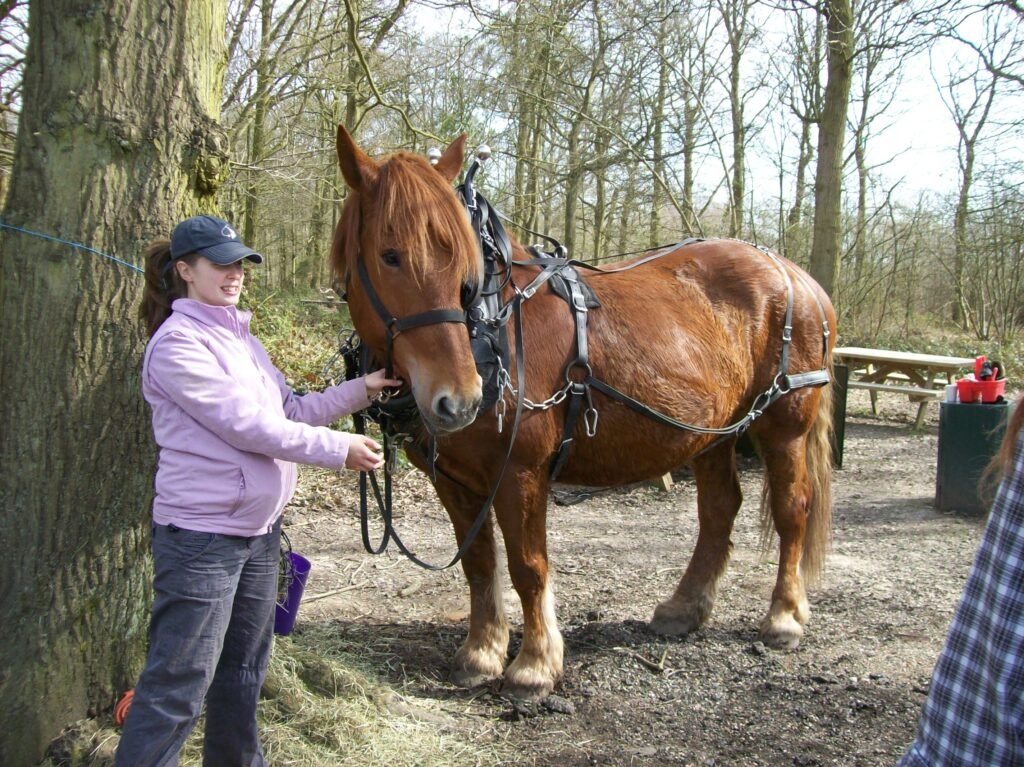
“Horses work very differently, in all respects. They have hooves, not wheels, they find lots of different ways between the trees, need no tracks and bring nutrition to the wood rather than wash it out. Because they are small and agile (in comparison to machines) we can get single trees out and leave the rest of the wood untouched. There is also a big difference for people working with a horse instead of a machine. You get wet. You get dirty. You are never alone. You leave the wood a better place than you found it.”
Steffi Schaffler, Reforesting Scotland, Autumn/Winter 2019
All photos by Richard Moulson